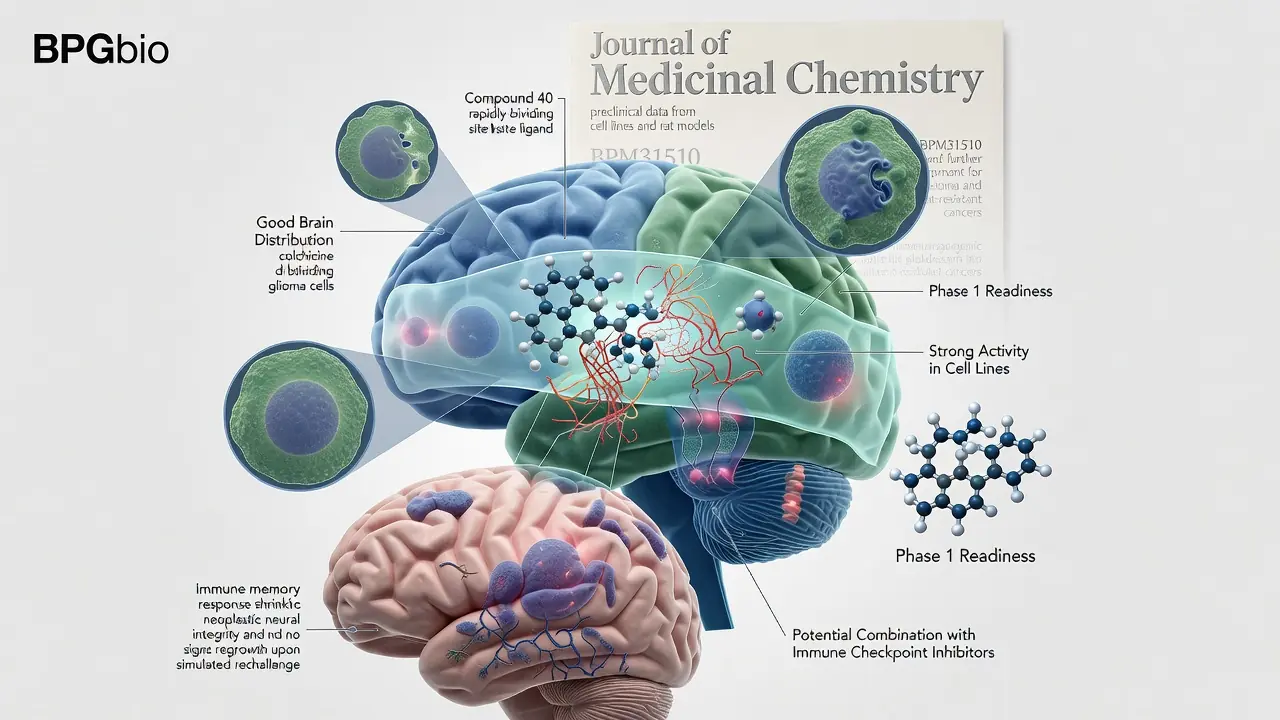
BPGbio, a clinical-stage biopharmaceutical company, has published preclinical research in the Journal of Medicinal Chemistry on Compound 40, an experimental small molecule aimed at glioma, including glioblastoma. The company says the candidate, also designated BRG399, is ready for Phase 1 studies. The findings remain laboratory and animal data and have not yet been tested in patients.
How the Compound Is Designed to Work
Compound 40 is built to disrupt microtubule formation by binding the colchicine-binding site on tubulin, a protein that cells need to divide. That mechanism targets the structural machinery of rapidly dividing cancer cells. The paper, titled "Discovery and Optimization of a Novel Brain-Penetrant Colchicine-Binding Site Ligand for Treatment of Glioma," describes the compound as able to cross the blood-brain barrier, a hurdle that has limited many brain tumor drugs.
What the Preclinical Results Show
According to the publication and company statements, Compound 40 showed strong antiproliferative activity across human glioma cell lines and distributed to the brain. In a rat model of a highly aggressive glioma, the compound reduced tumor burden and improved survival. Animals that survived the initial treatment showed no detectable tumor growth when re-exposed to glioma cells, which the authors describe as a possible immune-memory response.
- Strong antiproliferative activity in human glioma cell lines
- Good distribution to the brain in preclinical testing
- Reduced tumor burden and improved survival in a rat glioma model
- No detectable tumor regrowth in long-term survivors after rechallenge
Immunogenic Cell Death and Combination Potential
Vivek K. Vishnudas, the company's chief technology officer and corresponding author, said the compound may induce immunogenic cell death, a form of tumor cell death that can alert the immune system. That property could make it a candidate for combination with immune checkpoint inhibitors, though this remains a hypothesis that clinical work would need to test. The company frames the results as support for further development in hard-to-treat and treatment-resistant cancers.
Limits and Next Steps
Glioblastoma is among the most difficult cancers to treat, and many promising preclinical agents have not translated into clinical benefit. The current evidence comes from cell lines and a single animal model, and it does not establish safety or effectiveness in people. Phase 1 trials would be the first step in evaluating tolerability and dosing. BPGbio also notes that its separate candidate, BPM31510, recently completed a Phase 2 trial in newly diagnosed glioblastoma, but the results discussed here concern Compound 40 alone.