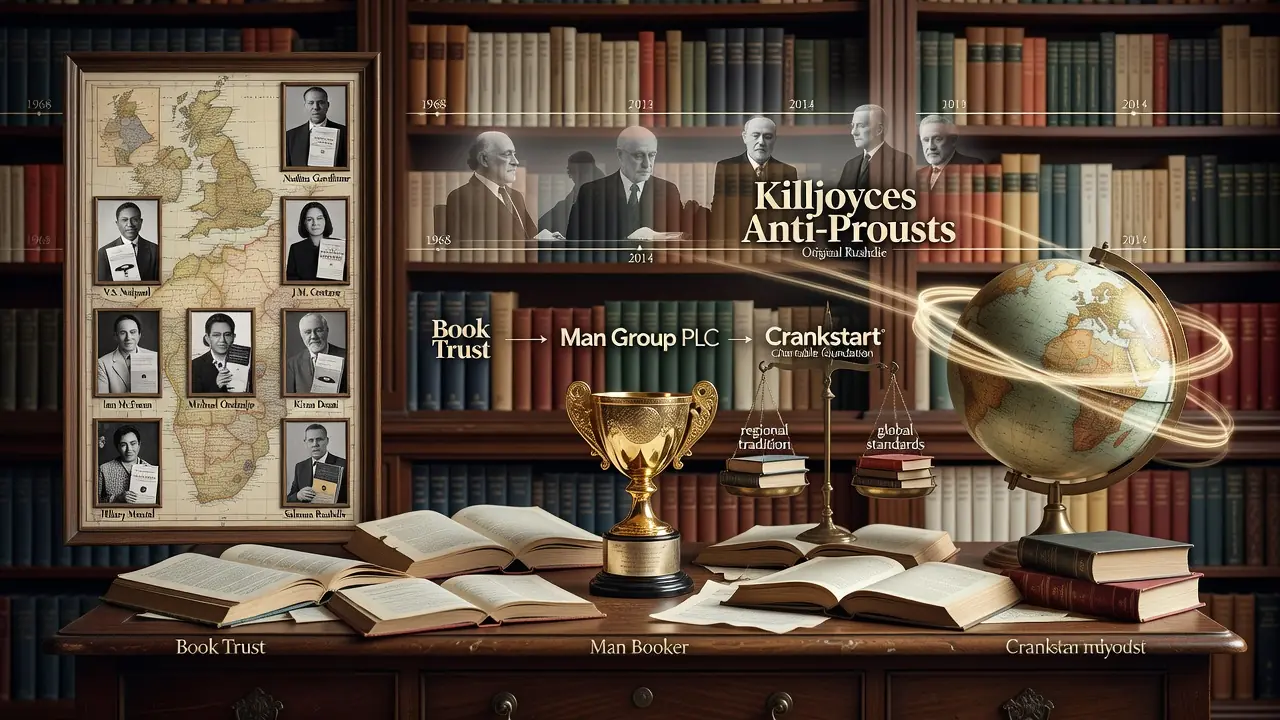
The Booker Prize began in 1968 as a British answer to France's Prix Goncourt, sponsored by the multinational company Booker McConnell. Its eligibility was once narrow, but a 2013 decision opened the award to English-language writers worldwide from 2014, reshaping who can compete for one of literature's most visible honors.
A Prize Built on a Narrow Frame
When the award launched, only English-language writers from the United Kingdom, the Republic of Ireland and Commonwealth countries could enter. That boundary reflected the prize's origins as a regional literary institution rather than an international one. The Prix Goncourt served as the model for a prestigious, single annual award that could draw public attention to new fiction.
The 2014 Change and Its Logic
The announcement that the prize would admit writers from anywhere in the world changed its scope considerably. English is used by writers across many countries, and the expanded rules acknowledged that shift. The decision also meant that judges would weigh a far larger body of work, with consequences for how the shortlist and winners are chosen.
Controversy and Changing Sponsorship
The prize has faced disputes over the years. In 1984, Salman Rushdie, who had won in 1981 for Midnight's Children, criticized a judging committee whose chair said he had not read James Joyce or Marcel Proust and did not want to reward writers like them. Rushdie called the judges "Killjoyces" and "Anti-Prousts." Administration also moved over time: the Book Trust oversaw the prize until 2002, the investment firm Man Group PLC then took over and the award became the Man Booker Prize, and in 2019 it reverted to the Booker Prize under the sponsorship of the charitable foundation Crankstart.
Why the Prize Still Matters
Past recipients include V.S. Naipaul, Nadine Gordimer, J.M. Coetzee, Ian McEwan, Michael Ondaatje, Kiran Desai and Hilary Mantel, a list that shows how the award has shaped the reputation of English-language fiction. Its ongoing relevance depends on how its judging standards and global reach are balanced, a question that the 2014 expansion and the earlier controversies continue to bring into focus.