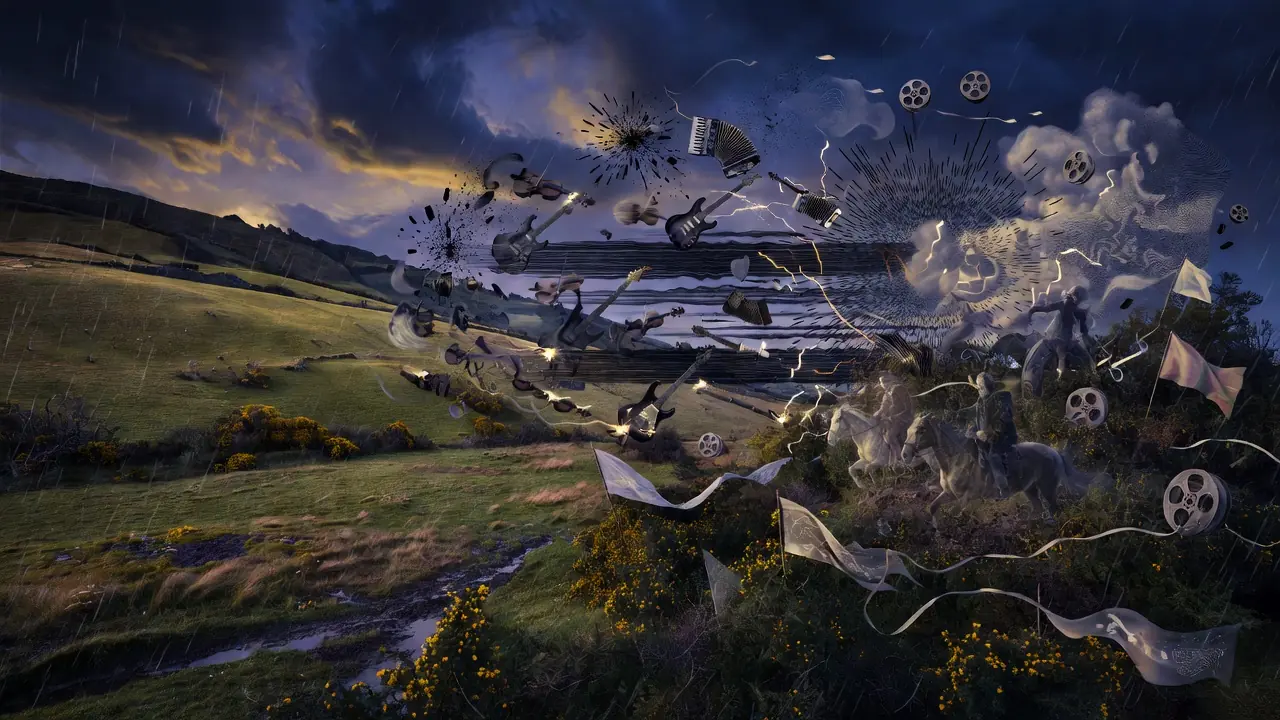
Listeners new to Shovel Dance Collective should expect little gentleness. Their third album, Everything in Readiness, opens with a suite of three songs running more than ten minutes, moving through abrupt sonic shifts that the band's nine members stitch into a dense, unpredictable collage.
A Collage That Refuses Easy Entry
The record moves from a grinding one-note drone to a reel that blends traditional fiddle playing with a harsh, squalling noise. It then moves into Tally Ho! Hark Away!, a hunting song first collected in the late 1940s, set against a clattering, arrhythmic wall of sound in which a heavily distorted guitar is audible but the full instrumentation is hard to identify. The effect, the reviewer suggests, is closer to release than to unease.
Comparisons to Lankum, the Irish folk group whose experimental work has drawn wide attention, are easy to make. The writer argues they miss the mark, since the two groups sound almost nothing alike. A closer reference point, the piece suggests, is the field recordings, folk songs and avant-garde compositions issued by the Todmorden-based label Folklore Tapes.
Folk as a Response to Crisis
The album also places itself within a longer pattern in English folk, in which the music has often turned sharply experimental during periods of social strain. The electric folk of Fairport Convention, Pentangle and Steeleye Span emerged between 1968 and 1972, and the indie-folk movement of the early 2000s drew on the bleaker, eerier side of traditional song.
Shovel Dance Collective's political outlook, which the piece describes as openly left-wing, connects its material to present concerns. The closing track, I Wish There Was No Prisons, and the 1694 broadside Bold Captain Avery are examined as examples of how older songs can be read for contemporary resonance. The review notes that the broadside's romantic portrait of the pirate Avery sits uneasily with the historical record of his violent raids.
Why the Sound Matters Most
Although the album's politics invite discussion, the review concludes that its most immediate appeal lies in its sonic surprises. Its lurching structure keeps the listener working to follow it, and the result, in the writer's view, makes centuries-old songs feel urgently alive.